
الأمير فيصل بن سلمان يرعى حفل تسليم جائزة الملك سلمان العالمية – أخبار السعودية
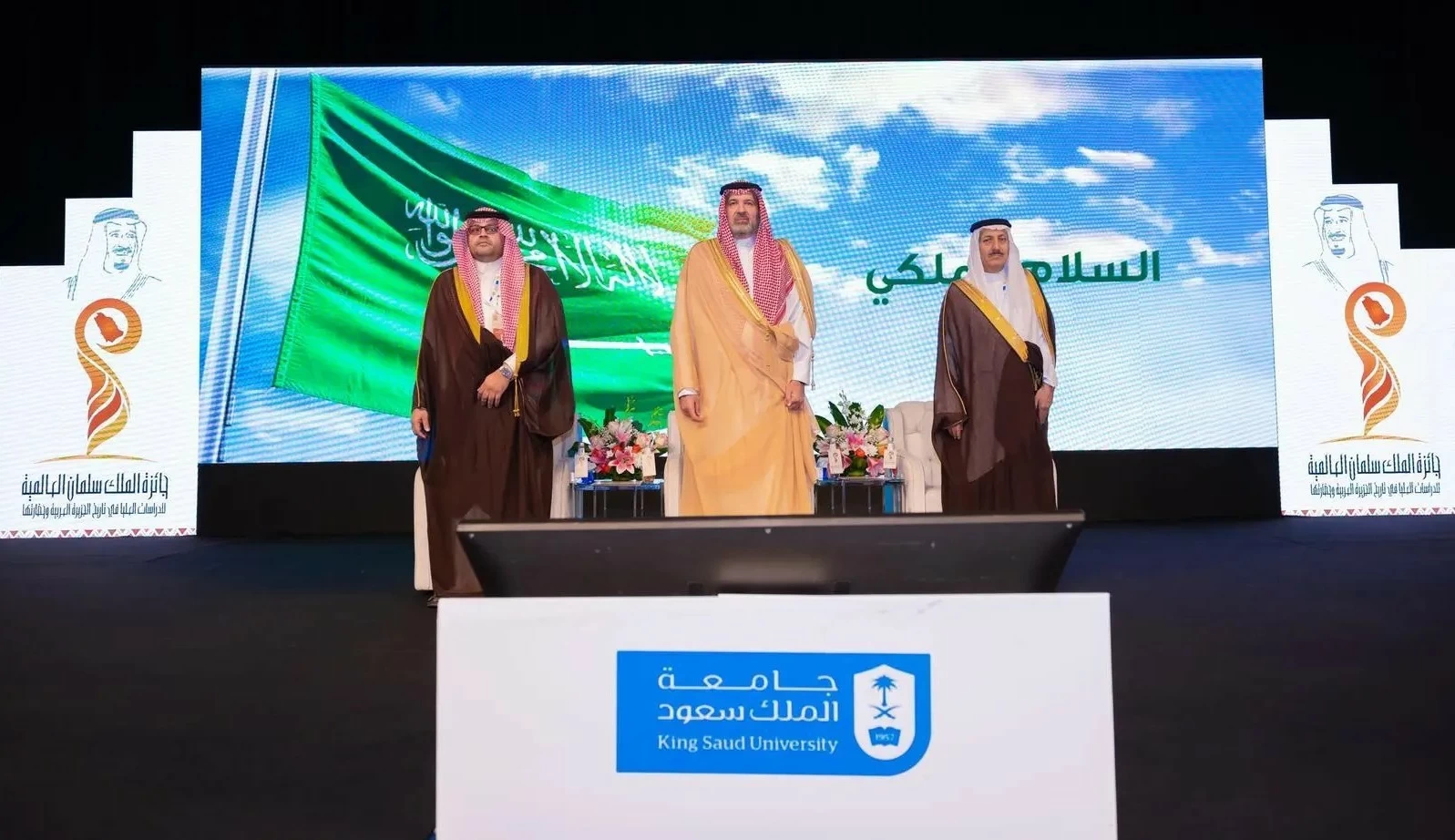

رعى المستشار الخاص لخادم الحرمين الشريفين رئيس مجلس إدارة دارة الملك عبدالعزيز الأمير فيصل بن سلمان بن عبدالعزيز، اليوم، حفل تسليم جائزة الملك سلمان العالمية للدراسات العليا في تاريخ الجزيرة العربية وحضارتها في دورتها الثالثة، الذي نظمه مركز الملك سلمان لدراسات تاريخ الجزيرة العربية وحضارتها بجامعة الملك سعود، بحضور عدد من الأمراء والوزراء والأكاديميين والباحثين والمهتمين بتاريخ الجزيرة العربية وحضارتها.
واستُهل الحفل بالسلام الملكي، ثم تلاوة آيات من القرآن الكريم، أعقبها عرض فيلم تعريفي استعرض مسيرة الجائزة وأهدافها ودورها في دعم البحث العلمي وتعزيز الدراسات المتخصصة بتاريخ الجزيرة العربية وحضارتها، ثم جرى تكريم الفائزين وتسليمهم الجوائز والتقاط الصورة التذكارية.
وأكد المشرف العام على مركز الملك سلمان لدراسات تاريخ الجزيرة العربية وحضارتها الأمين العام للجائزة الأمير الدكتور نايف بن ثنيان، في كلمته خلال الحفل، أن الجائزة تُعد إحدى المبادرات العلمية الرائدة التي تجسد اهتمام خادم الحرمين الشريفين الملك سلمان بن عبدالعزيز آل سعود، وولي العهد رئيس مجلس الوزراء بدعم البحث العلمي وتحفيز الباحثين المميزين في مجال تاريخ الجزيرة العربية وحضارتها.
وأوضح أن الجائزة شهدت تطوراً ملحوظاً في نظامها الأساسي وآليات التحكيم والترشيح بما يواكب مستهدفات رؤية المملكة 2030، والدعم الكبير الذي توليه القيادة الرشيدة للبحث العلمي، مشيراً إلى اتساع نطاق المشاركة ليشمل جامعات عربية ودولية بعد أن كانت مقتصرة في دوراتها السابقة على المملكة ودول مجلس التعاون لدول الخليج العربية.
وبيّن أن اللجنة العلمية استقبلت ترشيحات من 18 جامعة تمثل 8 دول، هي: المملكة العربية السعودية، وبريطانيا، وألمانيا، وتركيا، والمغرب، واليمن، ومصر، وسلطنة عُمان، بإجمالي 56 رسالة علمية، منها 26 رسالة دكتوراه و30 رسالة ماجستير، فيما شارك في تحكيمها أكثر من 80 محكماً متخصصاً من داخل المملكة وخارجها.
وأشار إلى أن نتائج الدورة الثالثة أسفرت عن فوز 4 رسائل في مرحلة الدكتوراه و5 رسائل في مرحلة الماجستير، تضمنت إحدى الجوائز مناصفة بين مرشحين، مؤكداً أن موضوعات الرسائل الفائزة عكست تنوعاً علمياً في مجالات التاريخ السياسي والحضاري للجزيرة العربية عبر مراحله المختلفة.
وثمّن رعاية الأمير فيصل بن سلمان بن عبدالعزيز للحفل، معرباً عن شكره للجهات واللجان العلمية والتنظيمية المشاركة في إنجاح أعمال الجائزة، مؤكداً أن استمرارها يسهم في إثراء الدراسات التاريخية وتعزيز مكانة البحث العلمي المتخصص في تاريخ الجزيرة العربية وحضارتها.
وتُعد جائزة الملك سلمان العالمية للدراسات العليا في تاريخ الجزيرة العربية وحضارتها إحدى المبادرات العلمية الهادفة إلى تشجيع التميز البحثي، وإثراء المكتبة العلمية بالدراسات المتخصصة، التي تسهم في توثيق تاريخ الجزيرة العربية وإبراز إرثها الحضاري على المستويين الإقليمي والدولي.
The Special Advisor to the Custodian of the Two Holy Mosques and Chairman of the Board of Directors of the King Abdulaziz Foundation, Prince Faisal bin Salman bin Abdulaziz, today sponsored the ceremony for the presentation of the King Salman International Prize for Higher Studies in the History of the Arabian Peninsula and its Civilization in its third edition, organized by the King Salman Center for the Study of the History of the Arabian Peninsula and its Civilization at King Saud University, in the presence of a number of princes, ministers, academics, researchers, and those interested in the history of the Arabian Peninsula and its civilization.
The ceremony began with the royal anthem, followed by the recitation of verses from the Holy Quran, after which an introductory film was presented showcasing the journey of the prize, its objectives, and its role in supporting scientific research and enhancing specialized studies in the history of the Arabian Peninsula and its civilization. The winners were then honored, awarded their prizes, and a commemorative photo was taken.
The General Supervisor of the King Salman Center for the Study of the History of the Arabian Peninsula and its Civilization and Secretary-General of the Prize, Prince Dr. Nayef bin Thunayan, affirmed in his speech during the ceremony that the prize is one of the pioneering scientific initiatives that embodies the interest of the Custodian of the Two Holy Mosques, King Salman bin Abdulaziz Al Saud, and the Crown Prince, Prime Minister, in supporting scientific research and motivating distinguished researchers in the field of the history of the Arabian Peninsula and its civilization.
He explained that the prize has witnessed significant development in its basic system and mechanisms for judging and nomination, in line with the objectives of Saudi Vision 2030, and the substantial support that the wise leadership provides to scientific research. He pointed out that the scope of participation has expanded to include Arab and international universities, after being limited in its previous editions to the Kingdom and the Gulf Cooperation Council countries.
He indicated that the scientific committee received nominations from 18 universities representing 8 countries: Saudi Arabia, Britain, Germany, Turkey, Morocco, Yemen, Egypt, and Oman, with a total of 56 scientific theses, including 26 doctoral theses and 30 master’s theses, while more than 80 specialized judges from within and outside the Kingdom participated in the evaluation.
He noted that the results of the third edition resulted in the awarding of 4 doctoral theses and 5 master’s theses, one of which was shared between two candidates, emphasizing that the topics of the winning theses reflected a scientific diversity in the fields of political and civilizational history of the Arabian Peninsula across its various stages.
He appreciated the sponsorship of Prince Faisal bin Salman bin Abdulaziz for the ceremony, expressing his gratitude to the participating scientific and organizational committees for their role in the success of the prize’s activities, affirming that its continuity contributes to enriching historical studies and enhancing the status of specialized scientific research in the history of the Arabian Peninsula and its civilization.
The King Salman International Prize for Higher Studies in the History of the Arabian Peninsula and its Civilization is one of the scientific initiatives aimed at encouraging research excellence and enriching the scientific library with specialized studies that contribute to documenting the history of the Arabian Peninsula and highlighting its civilizational heritage on both regional and international levels.
تعليقات