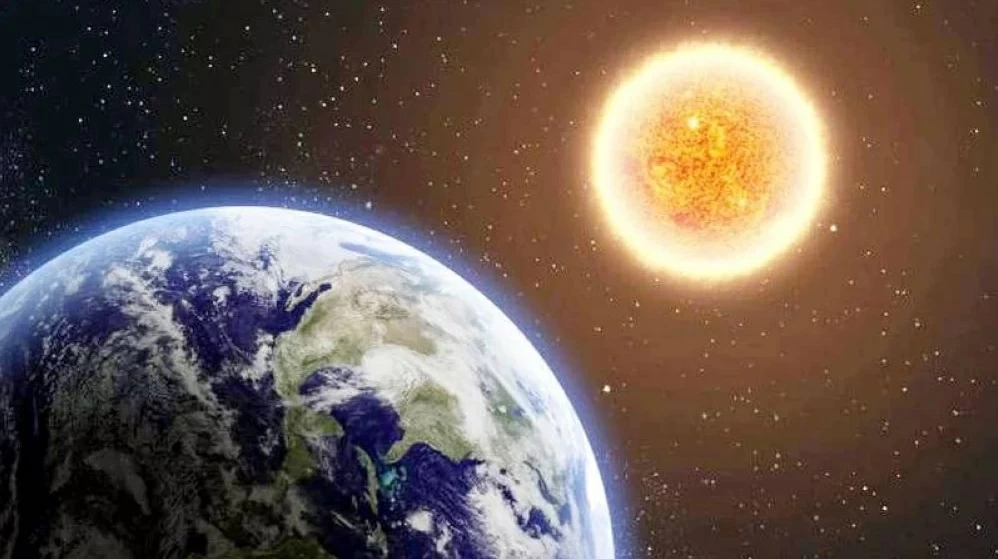
تشهد الأرض اليوم، وصولها إلى الأوج، وهي أبعد نقطة في مدارها حول الشمس عند الساعة 8:30 مساءً بتوقيت مكة المكرمة، إذ تبلغ المسافة بينهما نحو 152 مليون كيلومتر، في ظاهرة فلكية سنوية تؤكد أن تعاقب الفصول لا يرتبط ببعد الأرض عن الشمس، وإنما بميل محور دورانها.
وأفاد رئيس الجمعية الفلكية بجدة المهندس ماجد أبو زاهرة، أن وصول الأرض إلى هذه النقطة لا يعني انخفاض درجات الحرارة، إذ إن تعاقب الفصول لا يرتبط ببعد الأرض أو قربها من الشمس، وإنما بميل محور الأرض بنحو 23.4 درجة، وهو ما يجعل النصف الشمالي يتلقى أشعة الشمس بزاوية أكبر خلال فصل الصيف.
وأضاف أن مدار الأرض بيضاوي الشكل، لذلك تتغير المسافة بينها وبين الشمس بنحو 5 ملايين كيلومتر خلال العام، كما تبدو الشمس أصغر قليلًا عند الأوج مقارنة بالحضيض، إلا أن هذا الفرق لا يُلاحظ بالعين المجردة.
وأشار أبو زاهرة إلى أن الأرض تتحرك بسرعة أقل عند الأوج؛ مما يجعل فصل الصيف في النصف الشمالي أطول قليلًا من الشتاء، مؤكدًا أن هذه الظواهر جزء من التغيرات المدارية الطبيعية التي تساعد العلماء على فهم المناخ وتطور الفصول عبر الزمن.
The Earth witnesses today its aphelion, the farthest point in its orbit around the sun, at 8:30 PM Mecca time, with a distance of about 152 million kilometers between them, in an annual astronomical phenomenon that confirms that the succession of the seasons is not related to the distance of the Earth from the sun, but rather to the tilt of its axis.
The head of the Astronomical Society in Jeddah, Engineer Majid Abu Zahra, stated that the Earth’s arrival at this point does not mean a decrease in temperatures, as the succession of the seasons is not related to the Earth’s distance from or proximity to the sun, but rather to the tilt of the Earth’s axis by about 23.4 degrees, which causes the northern hemisphere to receive sunlight at a greater angle during the summer.
He added that the Earth’s orbit is elliptical, so the distance between it and the sun changes by about 5 million kilometers throughout the year, and the sun appears slightly smaller at aphelion compared to perihelion, although this difference is not noticeable to the naked eye.
Abu Zahra pointed out that the Earth moves more slowly at aphelion, making the summer in the northern hemisphere slightly longer than winter, emphasizing that these phenomena are part of the natural orbital changes that help scientists understand the climate and the evolution of the seasons over time.